
The first time I tried Water play for toddlers, I wasn’t thinking about sensory bins or developmental benefits.
I was just trying to calm down after a full-blown tantrum from my toddler.
I remembered reading somewhere that water helps regulate emotions, so I carried him to the sink, gave him a few toys, and let the water run.
🎁 Want More Sensory Play Without the Stress?
Grab our FREE “Simple Summer Days” Guide to get:
- A 5-day flexible play routine
- Sensory activity ideas (like this one!)
- Tips for building calm and connection into your day

📩 Download your free guide here
Something shifted.
The tears slowed. The tension melted. He started to play. And I could finally breathe.
That was our first Water play for toddlers sensory bin — and from that moment on, I was hooked.
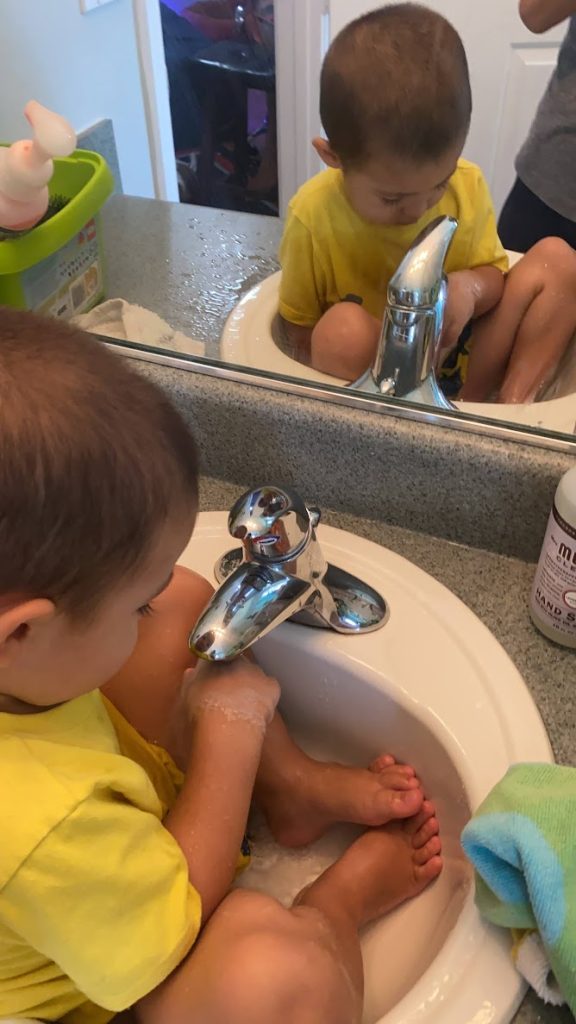
I’ve used water play ever since: on tough days, happy days, boredom days… in the tub, in the sink, outside in a bin, or with just a bowl on the kitchen floor.
So if you’re feeling overwhelmed, overstimulated, or need a reset, this post is for you.
I’m sharing 10 of my favorite low-prep, easy Water play for toddlers you can set up in minutes using what you already have at home. No stress. No mess (well, not too much 😉). Just connection, calm, and a little bit of everyday magic.
Why not 50? Because Pinterest overwhelm is real, and I’m not here to add to that stress. I only share what works in my home, in my sensory classes, and what I repeat over and over again — because I know these are always a win.
No stress. No perfection. Just calm, connection, and a little bit of everyday magic.
Simple play. Slower days. Real learning through love and everyday moments.
– Alexa
💦 Why Water play for toddlers Works (and Why I Keep Coming Back to It)
Water is naturally calming — for both kids and adults. It invites curiosity and slows things down.
When your toddler is pouring, splashing, or transferring, they’re not just having fun — they’re:
- Practicing hand-eye coordination
- Exploring cause and effect
- Developing focus and patience
- Learning math concepts like volume, more/less, full/empty
- Regulating their nervous system
And the best part? It doesn’t take much to get started.
🧺 10 Low-Prep Water Play Ideas Using What You Already Have
1. Sink Time Reset
Let your child play at the kitchen or bathroom sink. Add a stool, a few plastic animals, cups, or sponges. That’s it.
💡 Learning: pouring, scooping, imaginative storytelling, calming sensory input
2. Cup Pouring Station
Set up a bowl or bin of water and add measuring cups, ladles, or even empty yogurt containers. Let them pour between cups or fill a muffin tin.
💡 Learning: volume, control, coordination, focus

3. Color Mixing Bowls
Add a drop of food coloring or colored ice cubes to small bowls of water. Let your child pour and mix to create new colors.
💡 Learning: science concepts, color recognition, creativity

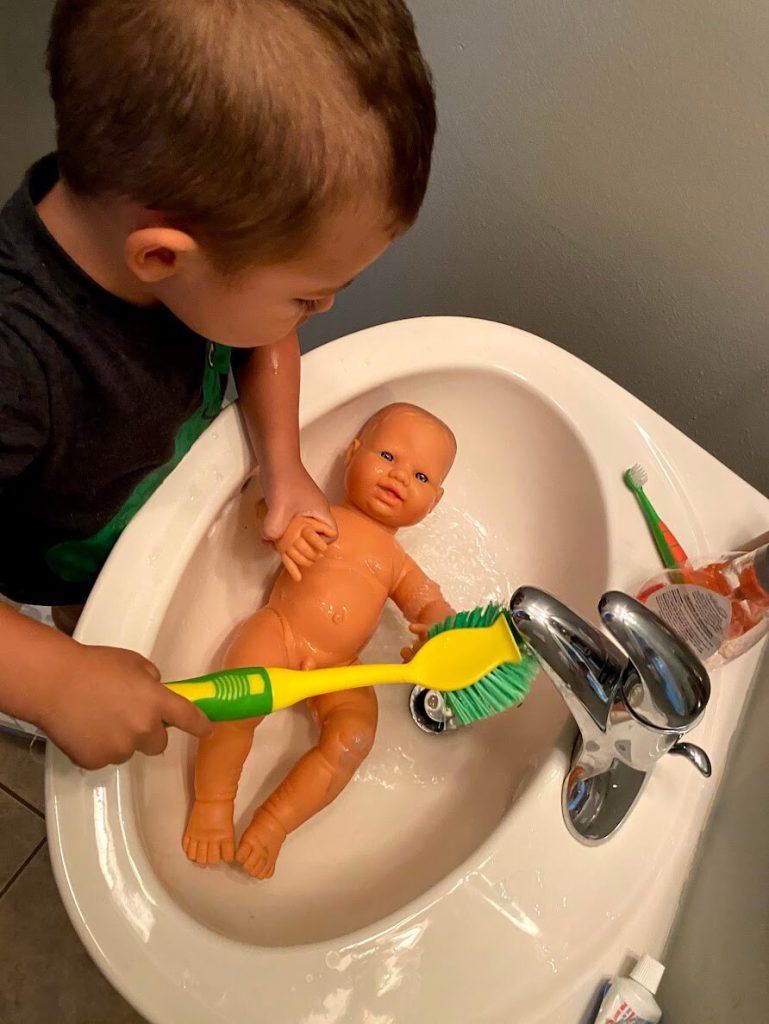
4. Wash the Toys
Give your toddler a bowl of soapy water, a sponge or toothbrush, and some washable toys (animals, cars, or blocks). Invite them to clean!
💡 Learning: role play, fine motor skills, sequencing

5. Water + Nature Bin
Fill a bin with water and collect leaves, flowers, sticks, or stones. Let your child float, stir, or pretend cook with their nature treasures.
💡 Learning: observation, nature connection, sensory exploration

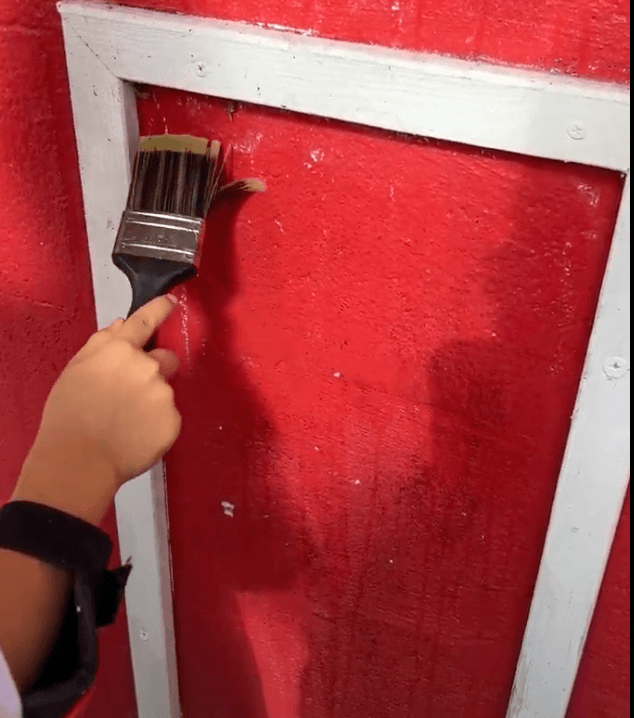
6. Water Painting
Give your toddler a paintbrush or sponge and let them “paint” water on a fence, wall, chalkboard, or sidewalk. No cleanup needed.
💡 Learning: mark-making (early writing!), cause and effect, gross motor skills
7. Bubble Foam Station
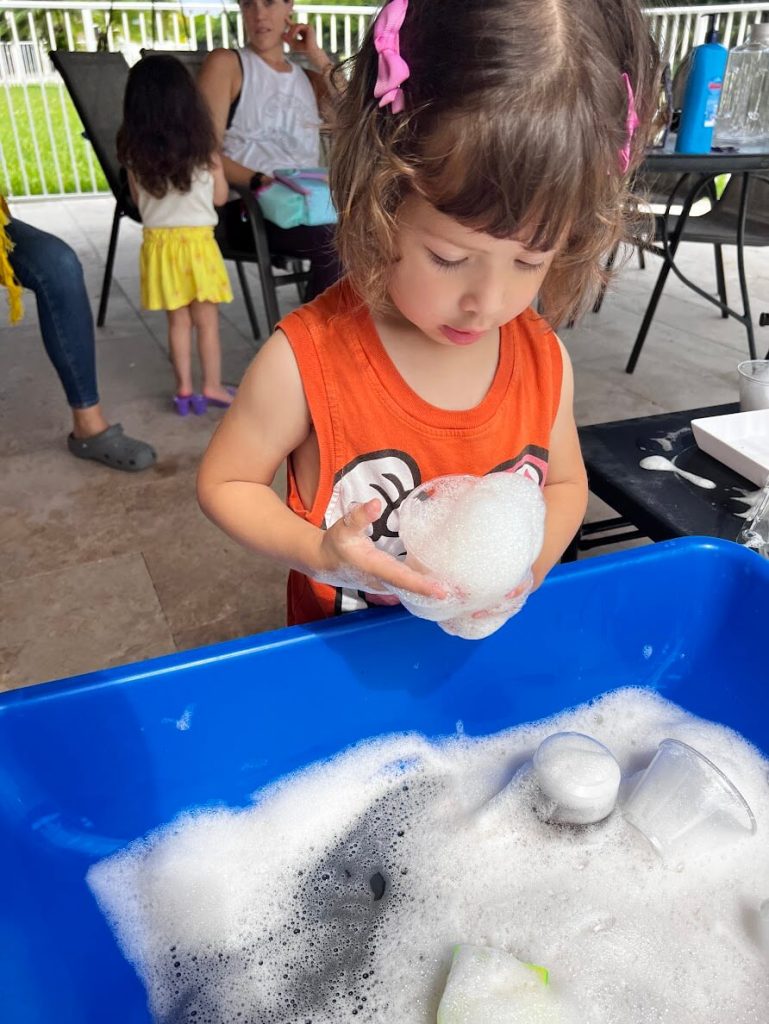
Add a little dish soap to water and let them mix it with spoons, whisks, or straws to make bubbles.
💡 Learning: problem solving, sensory stimulation, patience
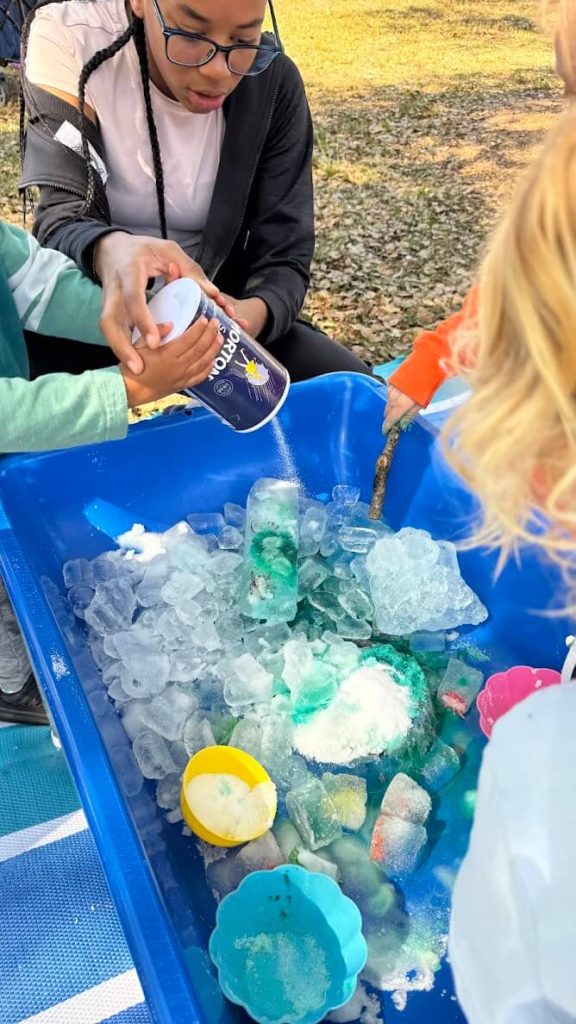
8. Ice Rescue
Freeze small toys in a bowl or ice cube tray. Pop them out and give your child warm water and tools like salt (spoons, spray bottles) to “rescue” them.
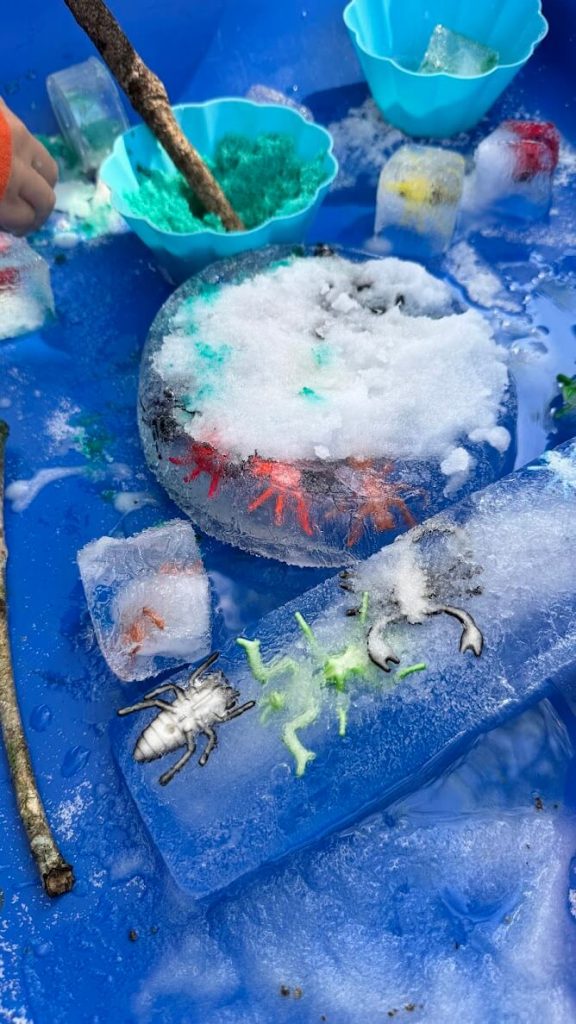
No time to freeze? Great, a bunch of icecubes! And play to melt them too.
💡 Learning: melting, temperature, persistence, fine motor
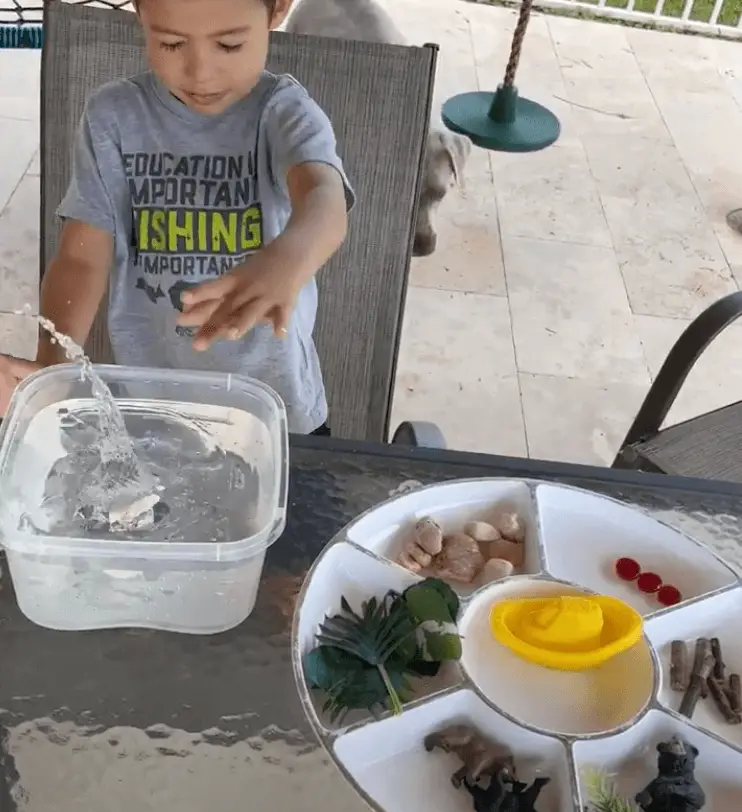
9. Floating or Sinking?
Gather a few objects (coin, plastic lid, sponge, block) and test which ones float or sink.
💡 Learning: science thinking, sorting, vocabulary
10. Water Transfer with Sponges
Place two bowls side by side — one filled with water, the other empty. Give your child a sponge to transfer water from one container to another.
💡 Learning: muscle strength, control, process-focused play

🧘♀️ It’s Not Just Play — It’s Connection
When your toddler is playing with water, they’re not just passing time. They’re regulating, focusing, and learning. And you? You’re giving them that space — not with fancy toys, but with intention, presence, and a bowl of water.
You’re doing enough.
You’re doing it right.
You’re showing up — and that matters most.
🎁 Want More Sensory Play Without the Stress?
Grab our FREE “Simple Summer Days” Guide to get:
- A 5-day flexible play routine
- Sensory activity ideas (like this one!)
- Tips for building calm and connection into your day